When Infrastructure Fails,
LEC Keeps Running.
Portable, multi-fuel power for disaster response, search & rescue, and emergency infrastructure. Near-zero emissions. Indoor-safe (no CO). Silent operation. Fuel-flexible logistics. From first responder wearables to emergency field generators.
The Reality
When the Grid Goes Down, Everything Depends on Power.
Modern disasters demand portable, indoor-safe, silent power — yet response teams remain shackled to diesel generators and battery resupply.
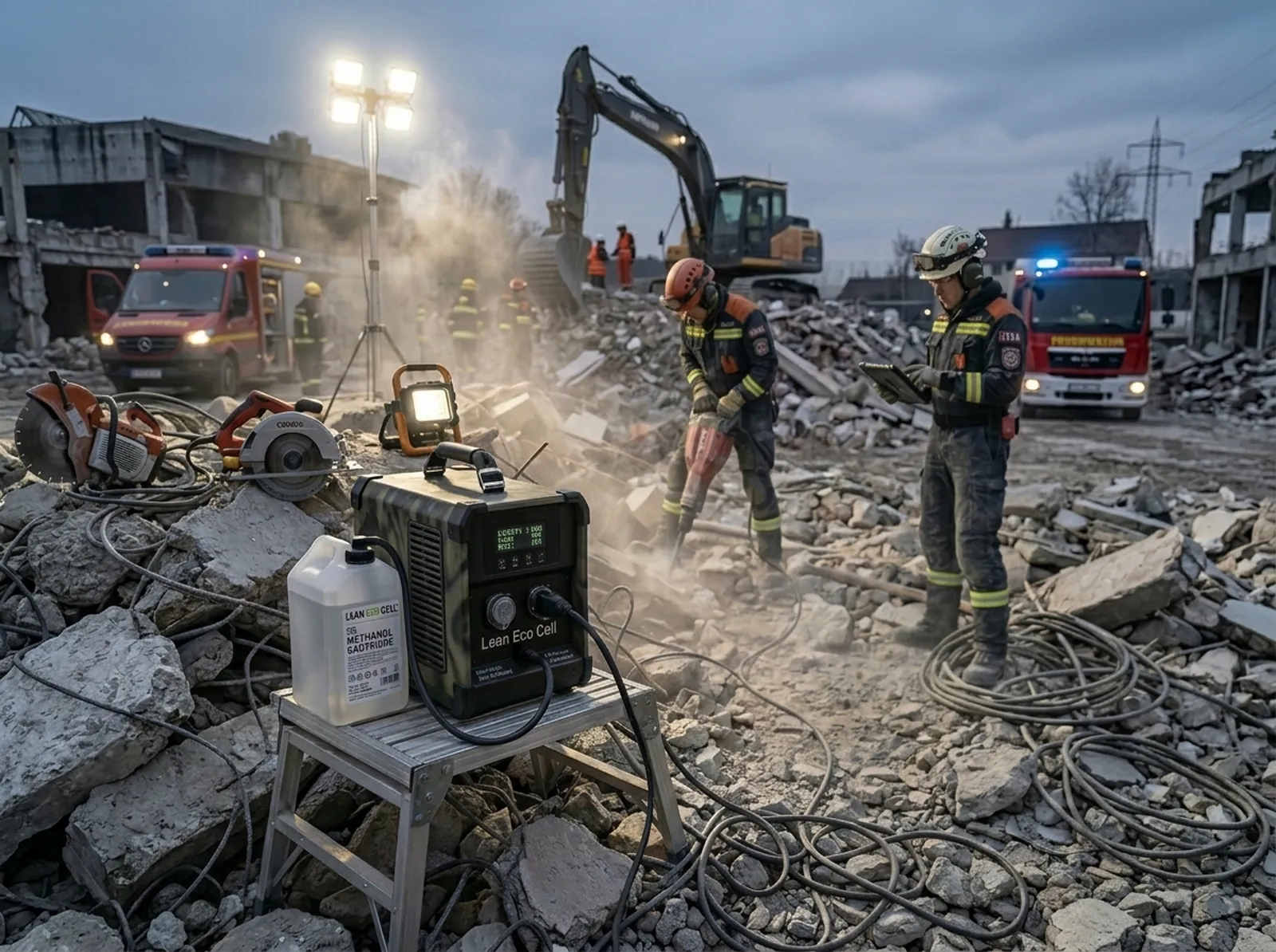
Every disaster creates the same impossible equation: the moment infrastructure fails is the exact moment power becomes most critical. Field hospitals need electricity. Communication networks need uplinks. Search teams need equipment. Displaced populations need light, heat, and medical support.
And the standard answer — diesel generators — creates its own problems. Fuel convoys into devastated areas. Toxic exhaust in enclosed shelters. Deafening noise at rescue sites where silence means the difference between finding survivors and missing them.
"This is not backup power. This is frontline power — designed to arrive when everything else has failed."
Why LEC
Four Advantages That Matter When Minutes Count
Emergency power is not a convenience. It is a lifeline. Every design decision in a Lean Eco Cell fuel cell system was made with that reality in mind.
Portable — Power That Moves to the Crisis
Disasters don't happen at convenient locations.
Earthquake zones are buried under rubble. Flood regions are cut off by water. Wildfire fronts shift hourly. Emergency power must be deployable to wherever the crisis is.
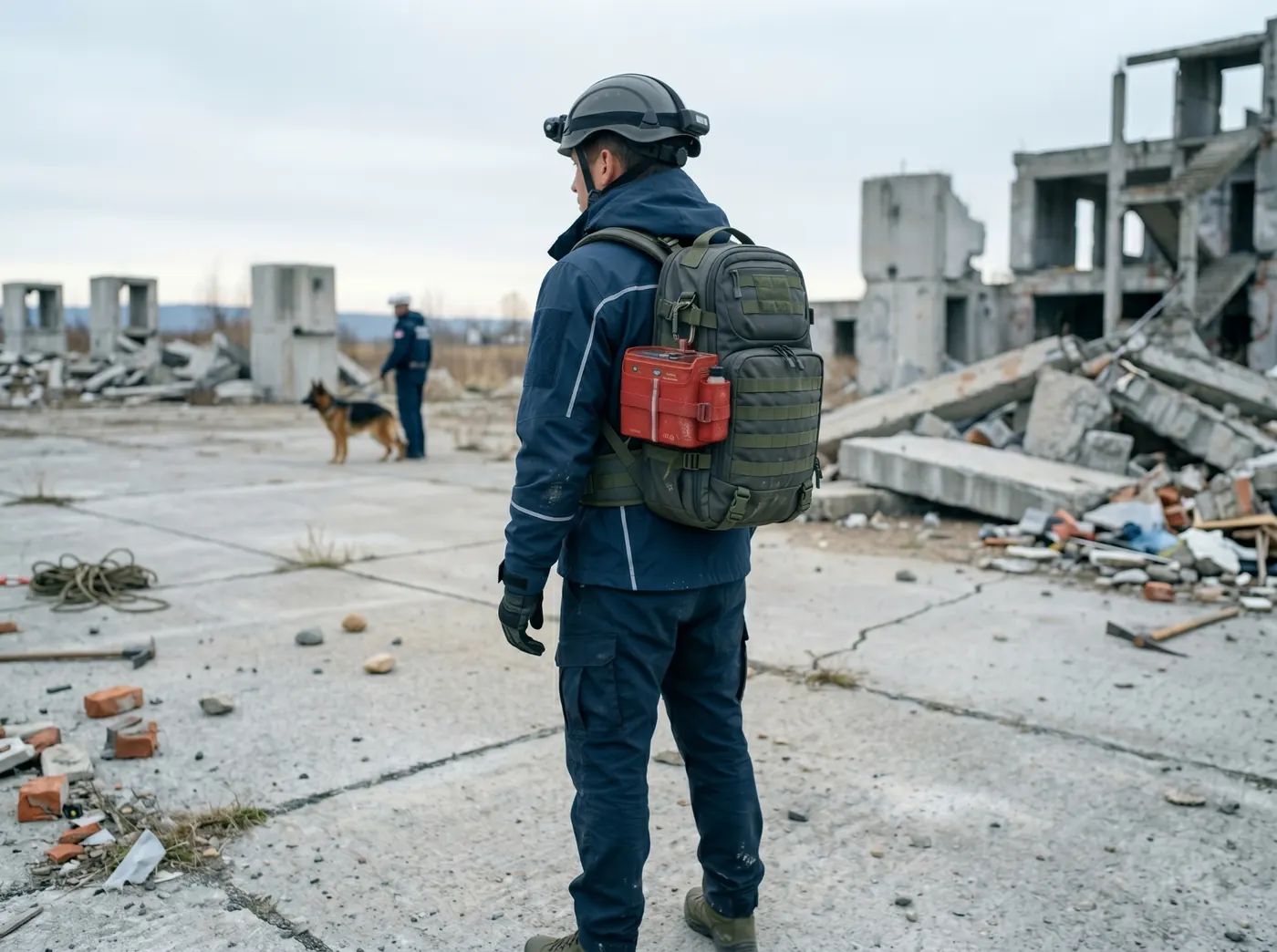
LEC fuel cell systems are helicopter-deployable, vehicle-mounted for rapid convoy deployment, and carried on foot by individual responders. The 25-100W wearable weighs a fraction of equivalent battery packs while delivering 24 to 72 hours of continuous operation.
When the bridge is out and the road is flooded, LEC still gets there.
Multi-Fuel — Use Whatever Fuel Is Available
In a disaster zone, supply chains break.
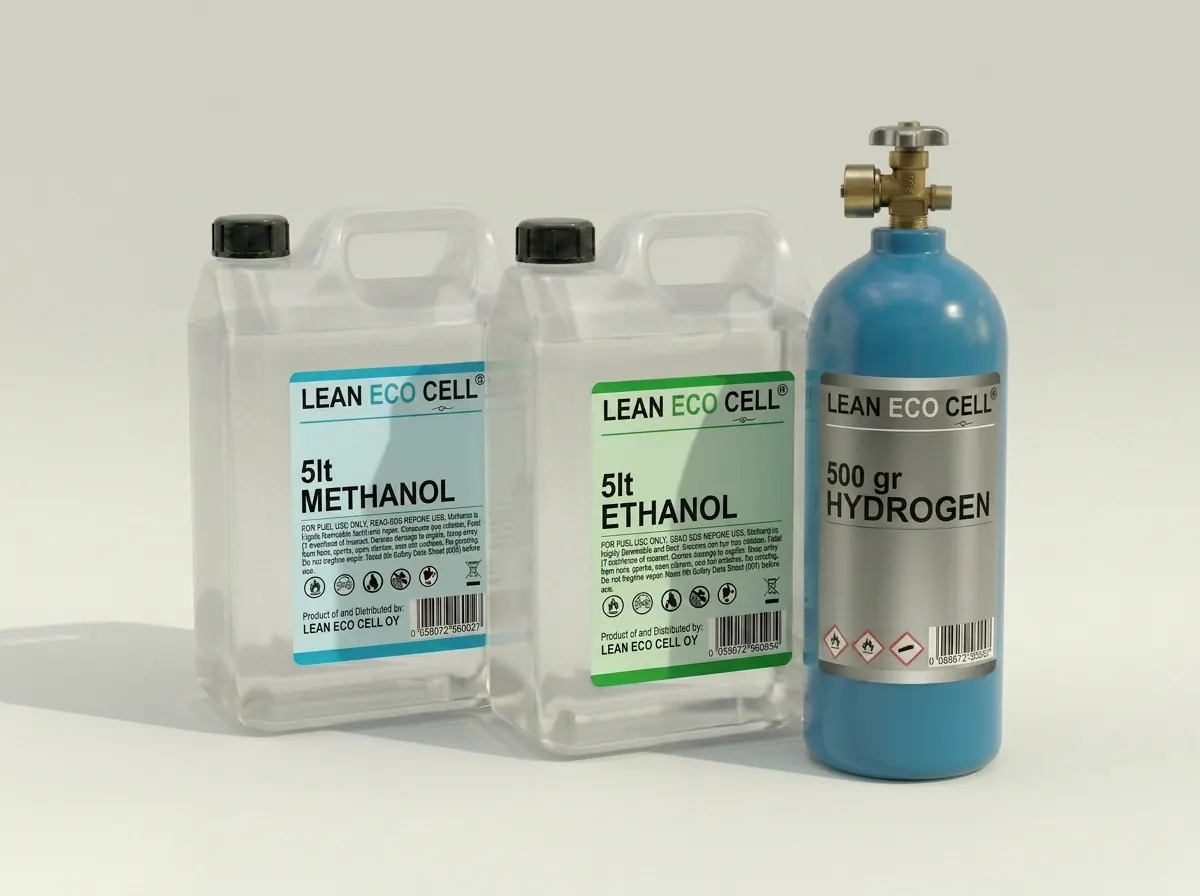
LEC fuel cell systems operate on hydrogen, methanol, and ethanol — switchable in the same unit with a simple water flush. When hydrogen is unavailable, switch to methanol. When methanol runs low, switch to ethanol.
In Haiti, in Turkey, in every major disaster zone of the past decade, fuel logistics determined which response teams could operate and which could not. Multi-fuel flexibility means LEC-equipped teams keep operating when single-fuel systems go dark.
Power Density — More Power, Less Weight
Helicopter payload capacity is finite.
Every kilogram matters when airlifting emergency equipment. Every gram matters when a search and rescue team carries gear through collapsed urban terrain on foot.
LEC fuel cell systems deliver up to ~15 times the power density of lithium-ion batteries. Same energy output in a fraction of the weight — or dramatically longer operational duration for the same weight.
| Metric | Lithium-Ion | LEC Fuel Cell |
|---|---|---|
| Power Density | ~350 W/kg | 1,000-5,000 W/kg |
| Advantage | Baseline | up to ~15× higher |
| Impact | Heavy, limited duration | Lightweight, extended ops |
Scalable Production — Surge Capacity When Disaster Strikes
Disasters create instant demand spikes.
When an earthquake hits, procurement agencies need thousands of power units now — not in 18 months when a factory expansion is complete.
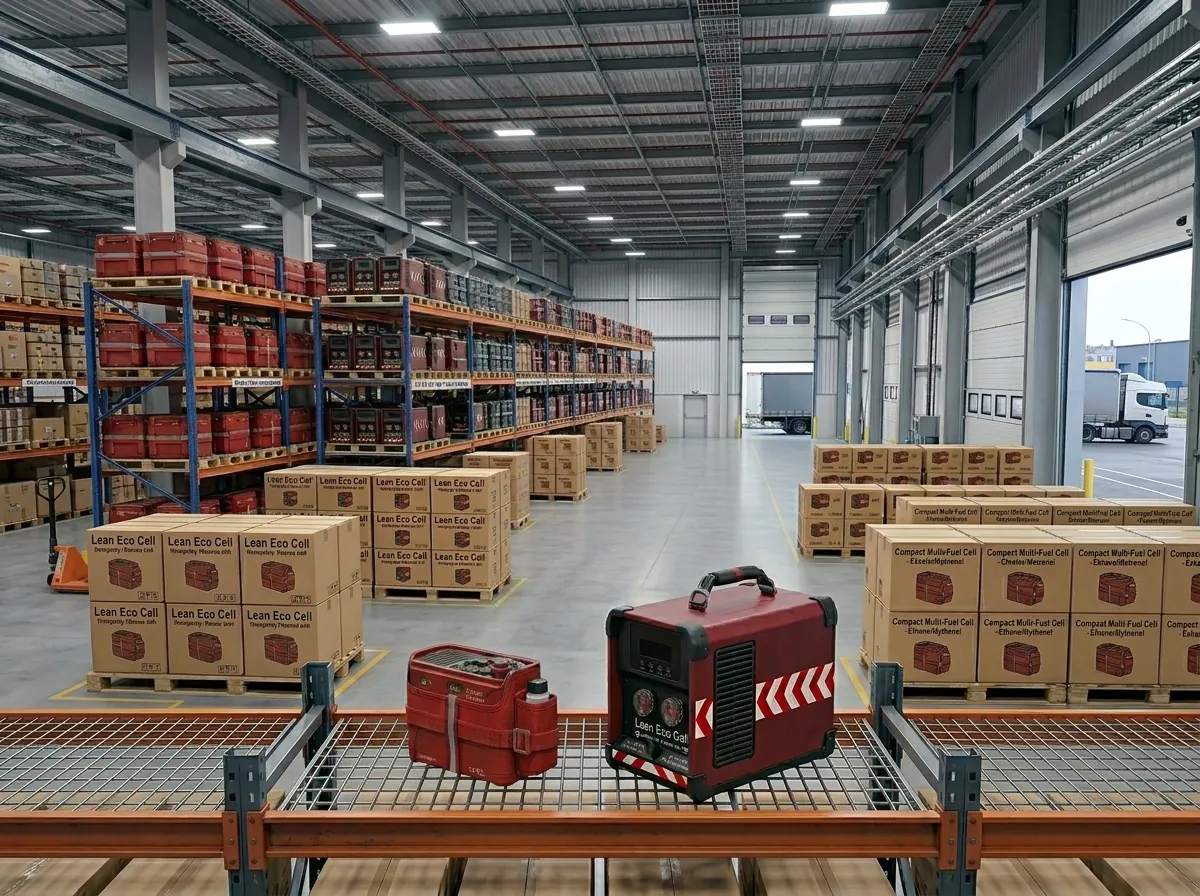
LEC's production methodology: low capital investment, no cleanroom environments, flexible materials. Production scales rapidly to meet emergency procurement surges — thousands of units without factory bottlenecks.
When you issue an emergency purchase order, LEC can deliver.
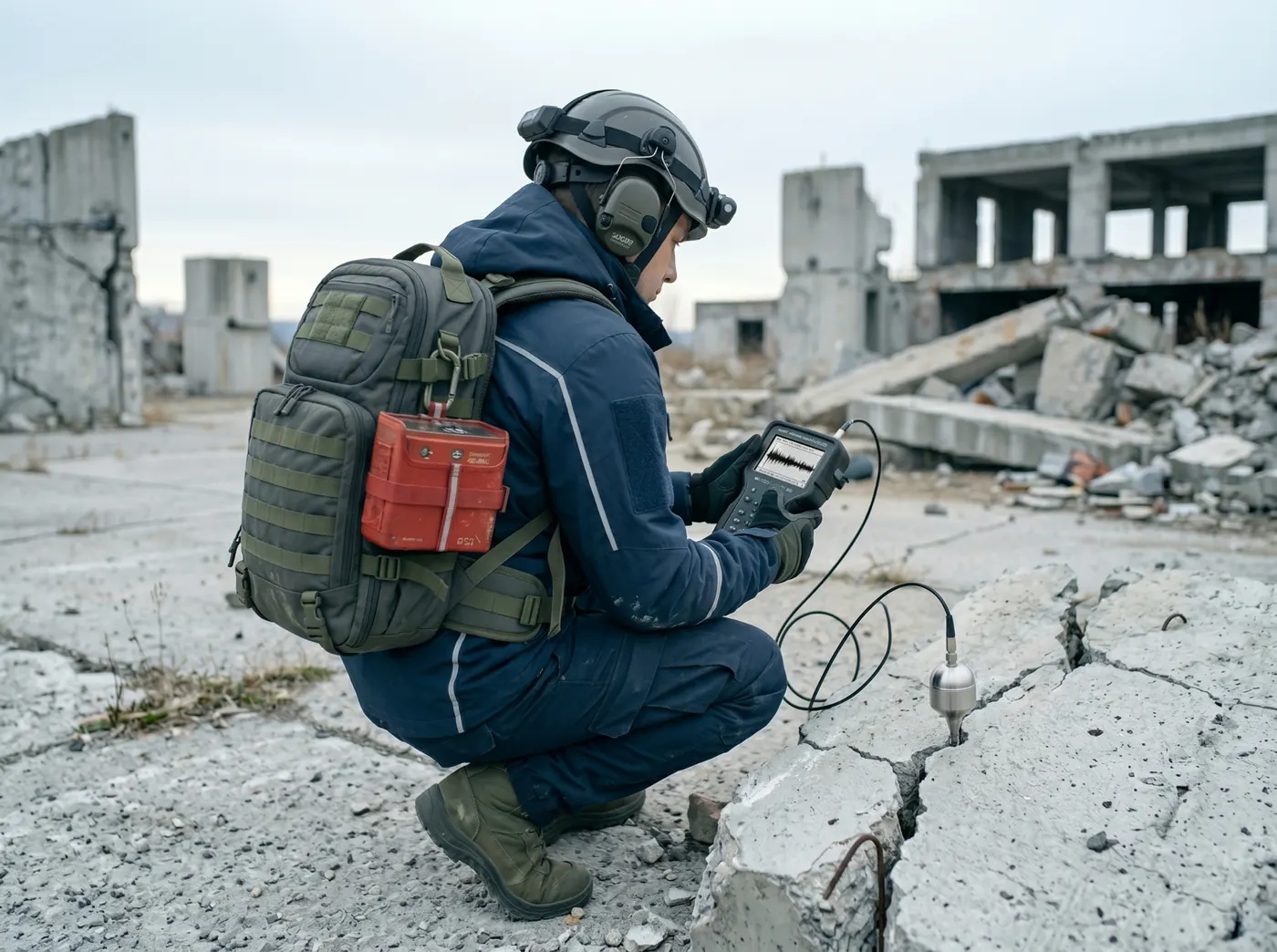
Silent power saves lives.
This is the advantage that no specification sheet can fully convey.
In earthquake response, urban search and rescue teams use acoustic detection methods to locate survivors trapped beneath collapsed structures. They listen for tapping, for voices, for breathing — faint sounds buried under tons of concrete and steel. These methods require silence at the rescue site.
Diesel generators make this impossible. Their 80-100 decibel output drowns out exactly the sounds that rescue teams are trained to detect.
LEC fuel cell systems operate near-silently. Search and rescue teams power their equipment — lights, communication systems, medical devices, thermal imaging — while maintaining the acoustic environment that detection methods require.
Not as a marketing statement. As a physical reality at earthquake sites around the world.
Product Families
Emergency Power Systems — Engineered for Crisis Response
Every Lean Eco Cell product operates on multiple fuels, produces no toxic exhaust (zero on H₂; near-zero CO₂ on methanol/ethanol), and is built for field deployment.
25W / 50W / 100W
First Responder Wearable Power System
Personal fuel cell power for emergency teams. Eliminates dependence on base-camp generators and battery resupply logistics.
- •Paramedic and EMT personal equipment power
- •Search and rescue wearable electronics
- •Incident commander mobile communications
500W / 1kW
Portable Emergency Field Generator
Deployable power for field hospitals, communication centers, and refugee assistance. No toxic exhaust — safe inside enclosed spaces. No ventilation needed. No carbon monoxide (CO) risk.
- •Field hospital and triage center power
- •Emergency communication relay stations
- •Mobile command post operations
1kW / 2kW
Emergency & Rescue UAV Power Pack
Extended flight time for search, rescue, and disaster assessment drones. Battery drones measure flight in minutes. Fuel cell drones measure it in hours.
- •Maritime man overboard search and rescue
- •Mountain and wilderness search operations
- •Post-earthquake damage mapping
Use Cases
How Emergency Teams Can Deploy LEC
Four crisis scenarios where portable, multi-fuel, silent power changes the response calculus. Each shows the challenge, the LEC advantage, and the critical capability that no other power source provides.
Earthquake Response
A 7.0+ earthquake strikes an urban center. Power grid collapses. Buildings are down. Thousands may be trapped. Rescue teams deploy within hours — and immediately face the same impossible choice: run diesel generators for power, or keep the site silent to hear survivors.
- Silent fuel cells power acoustic detection equipment without drowning out survivor signals
- No toxic exhaust — safe for underground rescue in collapsed structures
- Wearable power gives individual rescue workers 24–72 hours of continuous equipment operation
- Portable field generators power thermal imaging, comms, and medical equipment at collapse sites
"Acoustic search and rescue requires near-silence at the collapse site. LEC is the only portable power solution that enables this."
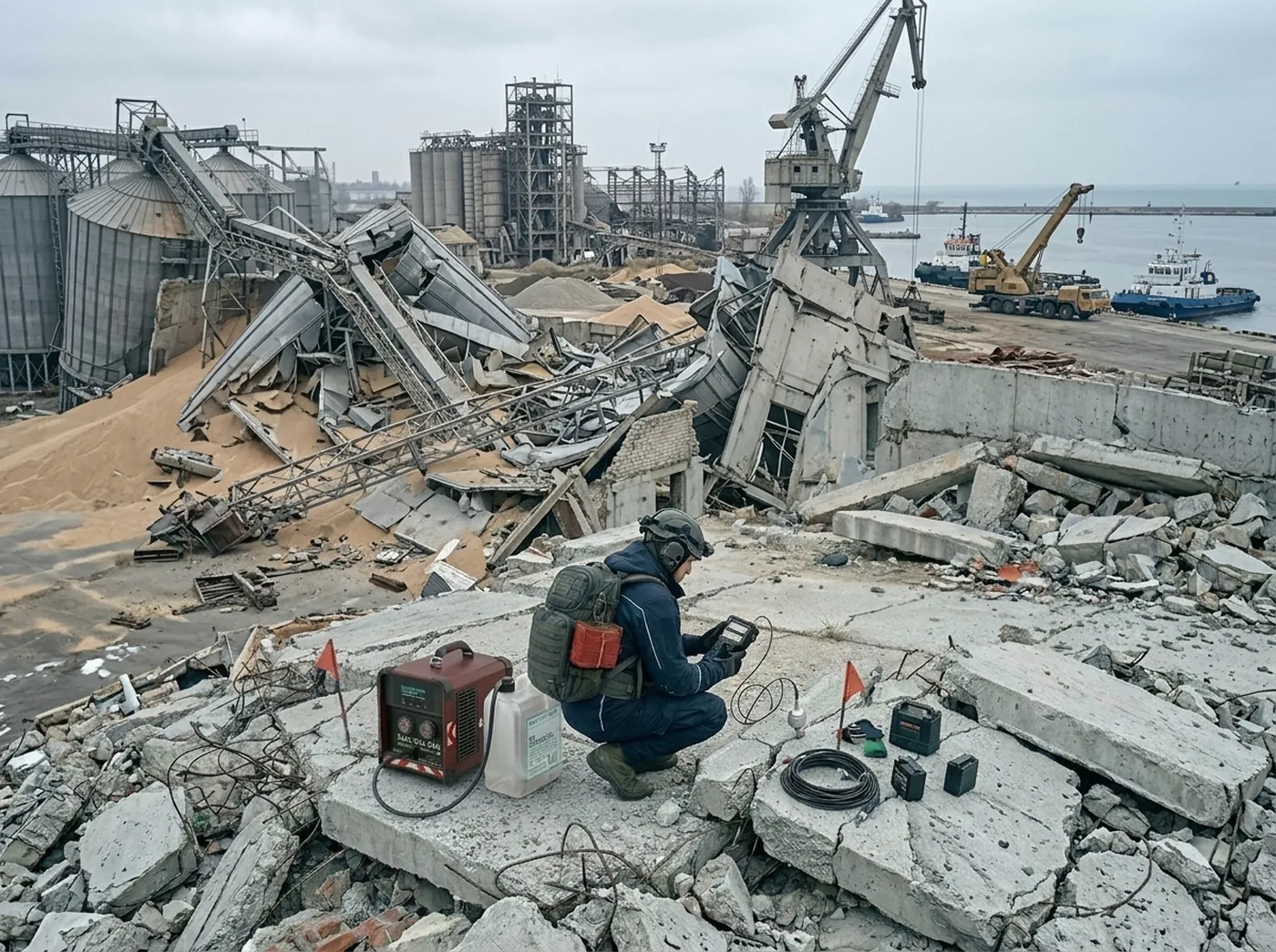
Flood & Hurricane Relief
A Category 4 hurricane or major flood displaces tens of thousands. Roads are impassable. Fuel supply chains are severed. Shelters are set up in schools, stadiums, and public buildings — enclosed spaces where hundreds of people breathe the same air.
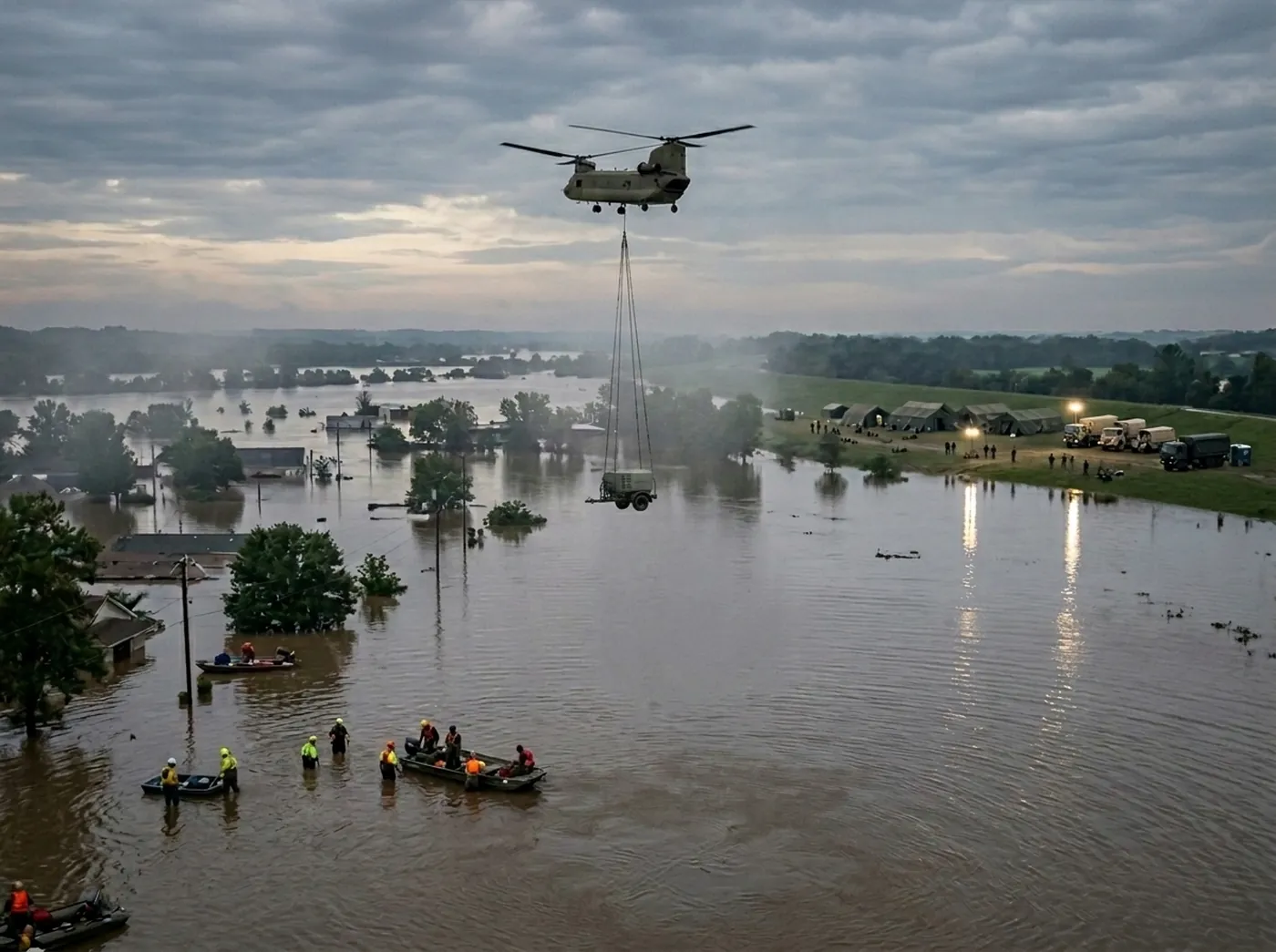
- Helicopter-deployable generators reach cut-off areas where fuel trucks cannot
- No toxic exhaust — safe for enclosed shelters (zero CO, NOx, particulates)
- Multi-fuel flexibility: use whatever is locally available (methanol, ethanol, hydrogen)
- UAV power packs extend aerial reconnaissance for flood monitoring and evacuation route planning
"No carbon monoxide (CO) at the exhaust — eliminates CO poisoning risk in enclosed emergency shelters."
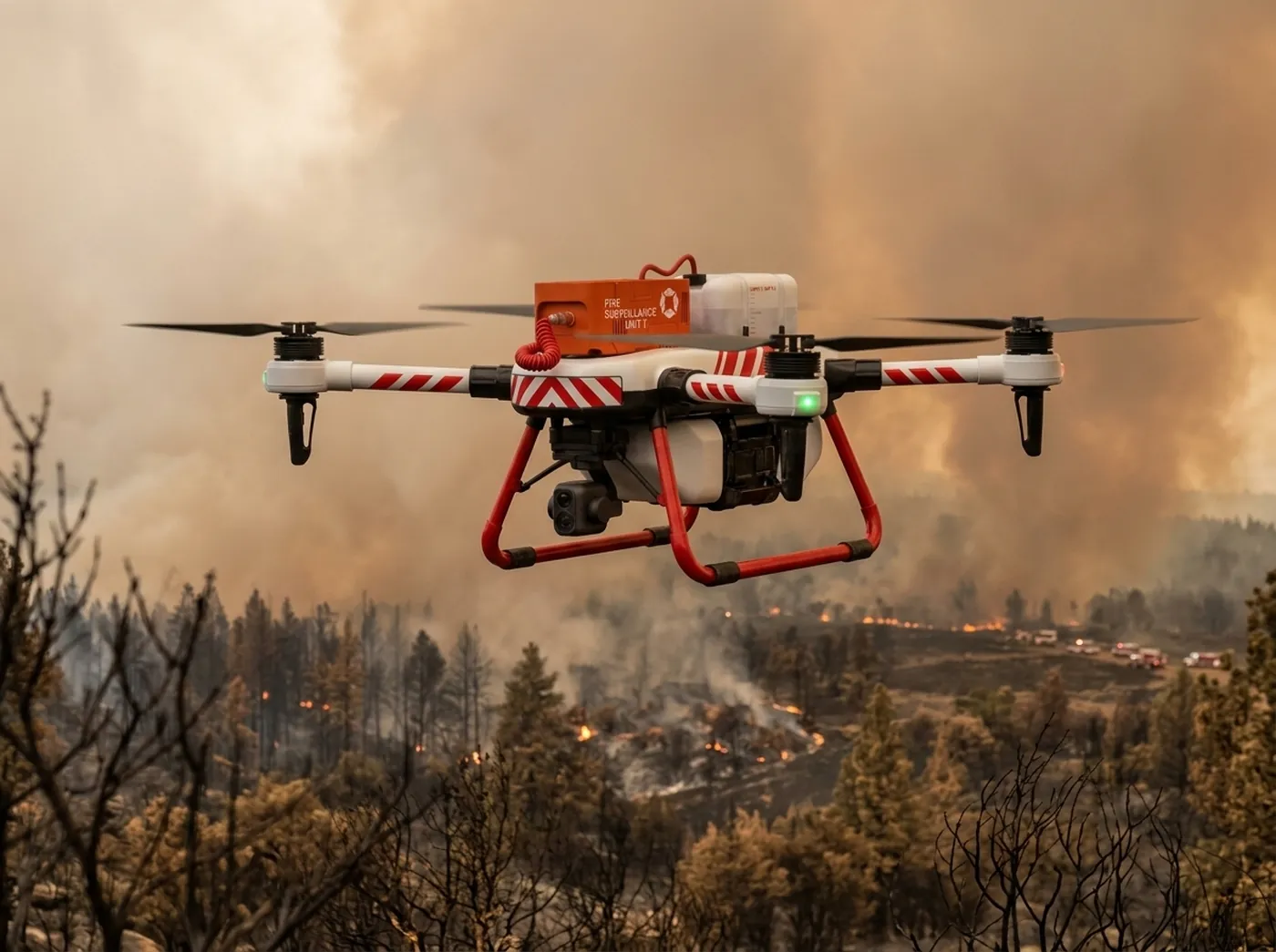
Wildfire Operations
A fast-moving wildfire threatens populated areas. Fire line communication networks must be established across remote terrain. Sensor networks monitor wind, temperature, and fire progression. Forward teams operate far from vehicle-accessible roads — and any spark from equipment could start a new fire.
- No combustion, no spark, no exhaust — zero fire ignition risk from power equipment
- Wearable power systems keep fire line communication teams operational for days
- Portable generators power sensor networks and mobile command posts at forward positions
- UAV power packs enable extended aerial fire monitoring beyond 20–30 minute battery limits
"No combustion, no spark, no exhaust — eliminating power generation as a fire ignition risk at forward positions."
Refugee & Humanitarian Operations
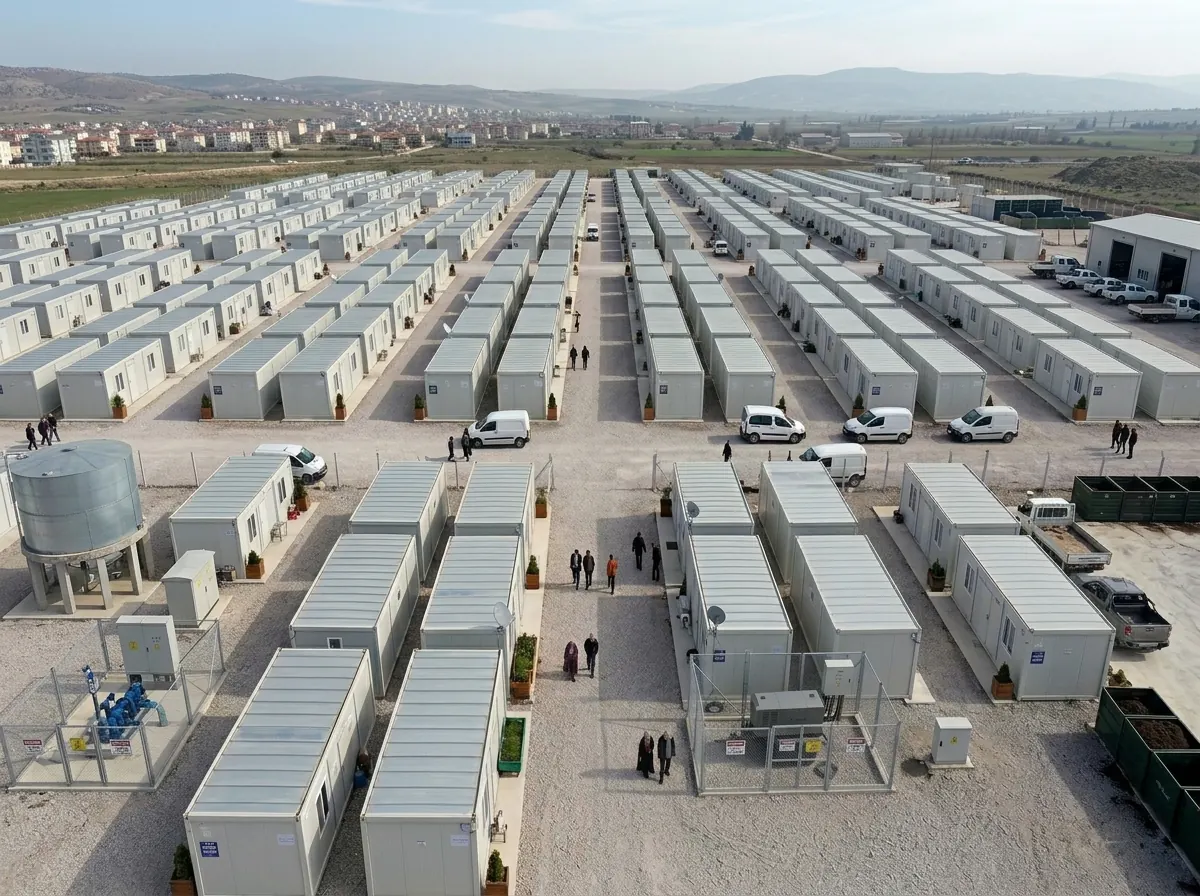
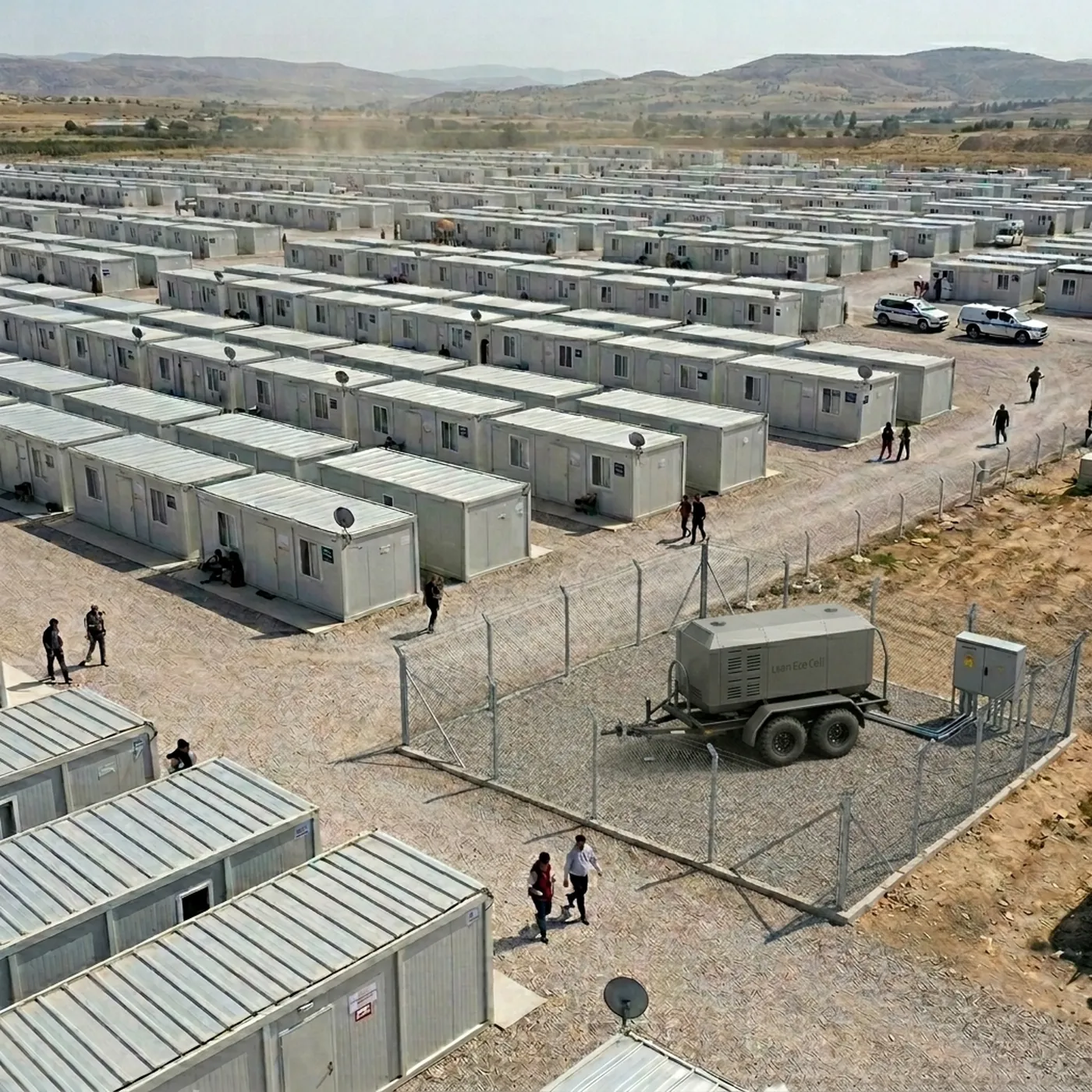
A prolonged crisis — conflict, earthquake, climate disaster — creates a refugee settlement housing thousands for weeks or months. Power is needed for clinics, water purification, communication, and lighting. This is sustained operations.
- Continuous clean power for 24/7 medical clinics in enclosed structures (zero CO/NOx/particulates; H₂ mode is fully zero-emission)
- Multi-fuel operation: logistics teams source fuel locally, not through specialized supply chains
- Silent operation maintains livable conditions — diesel noise pollution degrades mental health
- Scalable production ensures additional units as a crisis expands from hundreds to tens of thousands
"Long-duration, near-zero-emission, silent operation for settlements where people live for weeks or months — not just the initial 72-hour response."
Trust
Built for Government-Grade Reliability
Patent-Pending Core Technology
PCT/IB2025/053004 — Single-piece MEA design eliminating mechanical failure points. Zero moving parts means zero field maintenance.
Lab-Validated Performance
45% stack / 41% net efficiency on methanol; 55% stack / 50% net on hydrogen (LHV). Multi-fuel capability (methanol, ethanol, hydrogen) ensures operation regardless of local fuel availability.
EU Co-Funded R&D
E-BOOST Project, Grant Agreement 101074381. European Union validated and co-funded research for next-generation portable energy.
European-Made, Field-Ready
Headquartered in Finland. No foreign supply chain dependencies. Designed and tested to operate in extreme climate and disaster conditions.
Get In Touch
Your Emergency Teams Deserve Power That Won't Fail Them.
When the next disaster strikes — and it will — will your response teams have power systems that match the urgency of their mission? Power that deploys where they deploy. Runs on whatever fuel is available. Operates silently when silence saves lives.