Build With Us.
Zero-Emission Fuel Cell Technology for the Net-Zero Era.
The fuel cell platform with the highest specific power (kW/kg) in its class — cost-efficient and built for OEM integration, industrial applications, and commercial operations. Hydrogen. Methanol. Ethanol. One technology. From portable units to containerized power.
The Platform
One Fuel Cell Technology. Three Fuels. Infinite Applications.
Every net-zero commitment eventually hits the same wall: portable power. One technology that adapts to the fuel reality of your operation, your geography, and your supply chain.
Every net-zero commitment eventually hits the same wall: portable power. Batteries run out too fast. Diesel generators emit too much. Hydrogen fuel cells need infrastructure that does not exist yet.
No separate product lines. No fuel lock-in. No dependence on hydrogen infrastructure that may be years away. One technology that adapts to the fuel reality of your operation, your geography, and your supply chain.
For OEMs, this means a single integration partner for every fuel scenario. For industrial operators, this means clean portable power that works where you work. For companies with net-zero commitments, this means zero local pollutant emissions at point of use today — and full zero-emission operation when running on hydrogen.
LEC removes the wall. Our patent-pending fuel cell platform operates on hydrogen, methanol, and ethanol — switchable in the same unit with a simple water flush.
Multi-Fuel Platform
Why LEC
Why Companies Are Building With LEC
Four structural advantages that separate LEC from batteries, diesel, and competing fuel cell technologies — engineered for the operations that net-zero mandates can't wait on.
Zero Emission at Point of Use
Net-Zero Aligned.
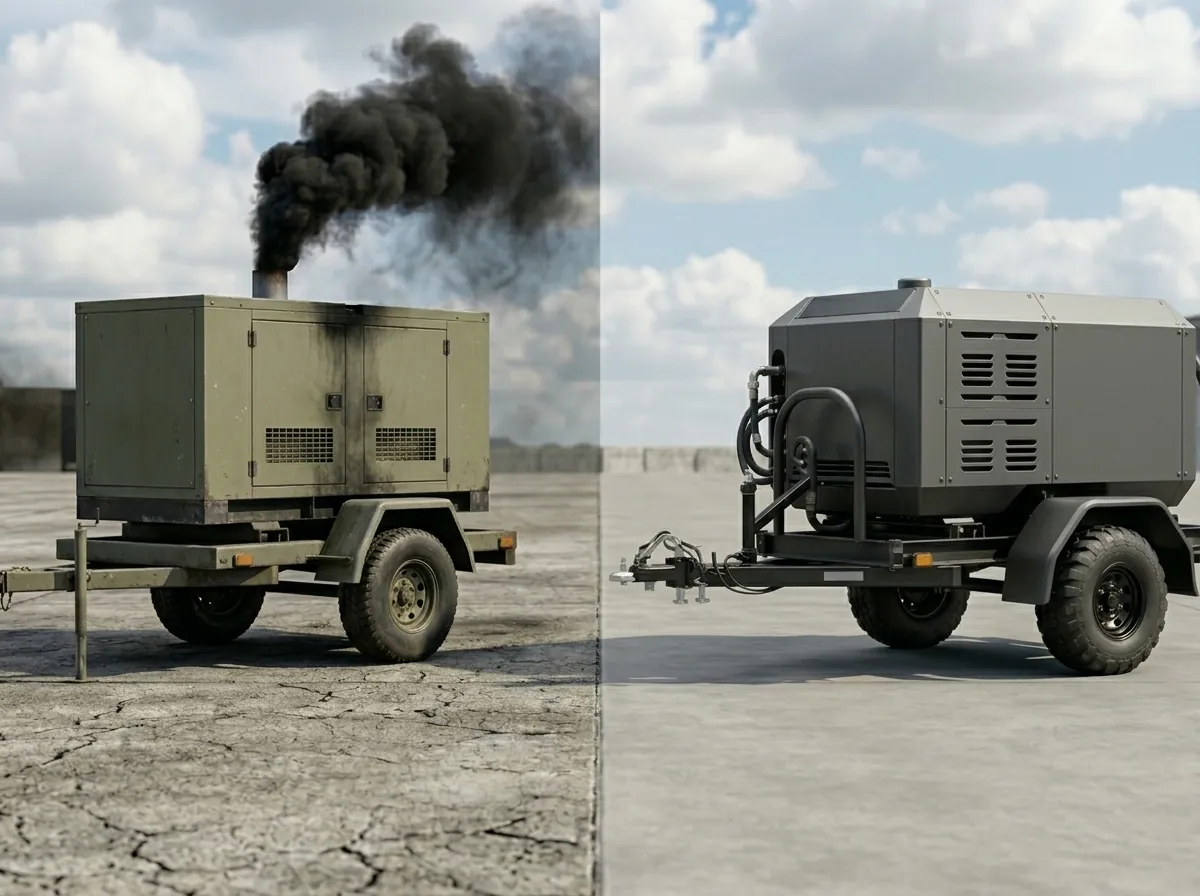
LEC fuel cells eliminate harmful local emissions during operation — no NOx, no particulates, no CO. On hydrogen, output is water only. On methanol or ethanol, CO₂ output is a fraction of an equivalent diesel generator. For companies operating under carbon reduction mandates, ESG reporting requirements, or voluntary net-zero commitments, LEC is portable power that aligns operations with environmental targets.
This is not greenwashing bolted onto conventional technology. The chemistry is inherently clean. Hydrogen operation produces water. Methanol and ethanol operation produces minimal CO₂ at levels that qualify as near-zero for most regulatory frameworks.
For industries where emission regulations tighten every year — construction, logistics, agriculture, mining — LEC is the portable power transition that does not require waiting for grid infrastructure to catch up.
Fundamentally Lower Cost Structure
vs. Competing Fuel Cell Technologies
Most fuel cell manufacturers require cleanroom facilities, specialized heavy equipment, precision assembly lines, and multi-million-dollar factory buildouts before the first unit ships. LEC does not.
Our patent-pending single-piece MEA architecture eliminates the manufacturing complexity that makes conventional fuel cells expensive. Less mechanical pressure needed between layers. No heavy stack hardware, no clamping compression. No complex sealing systems.
This is not an incremental improvement. It is a structural cost advantage. Simpler manufacturing translates directly to lower unit costs — making fuel cell technology economically viable for applications where competing fuel cell solutions have been priced out.
Up to ~15x Power Density. Longer Runtime. Lighter Weight.
vs. Batteries.
LEC achieves 1-5 kW/kg power density at stack level — three to fourteen times higher than lithium-ion batteries at 0.35 kW/kg — projected from validated MEA measurements across multiple membrane configurations.
A commercial drone powered by LEC flies longer and carries heavier payloads. A portable generator runs for hours where batteries run for minutes. A remote monitoring system operates for days without swap-outs or recharging infrastructure.
| Metric | LEC Fuel Cell | Li-Ion Battery | Advantage |
|---|---|---|---|
| Power Density (stack, projected) | 1-5 kW/kg | 0.35 kW/kg | up to ~15x |
| Runtime Scaling | Add fuel | Add batteries (weight) | Linear vs. diminishing |
| Recharge | Refuel in minutes | Hours to recharge | Operational continuity |
| Weight Penalty | Minimal at extended runtime | Exponential | Critical for mobile/aerial |
Multi-Fuel Flexibility. No Infrastructure Barrier.
H₂ · MeOH · EtOH — one unit
The hydrogen economy is coming. But it is not here yet. Not at the construction site in rural Norway. Not at the agricultural operation in central Turkey. Not at the remote pipeline inspection point in northern Finland.
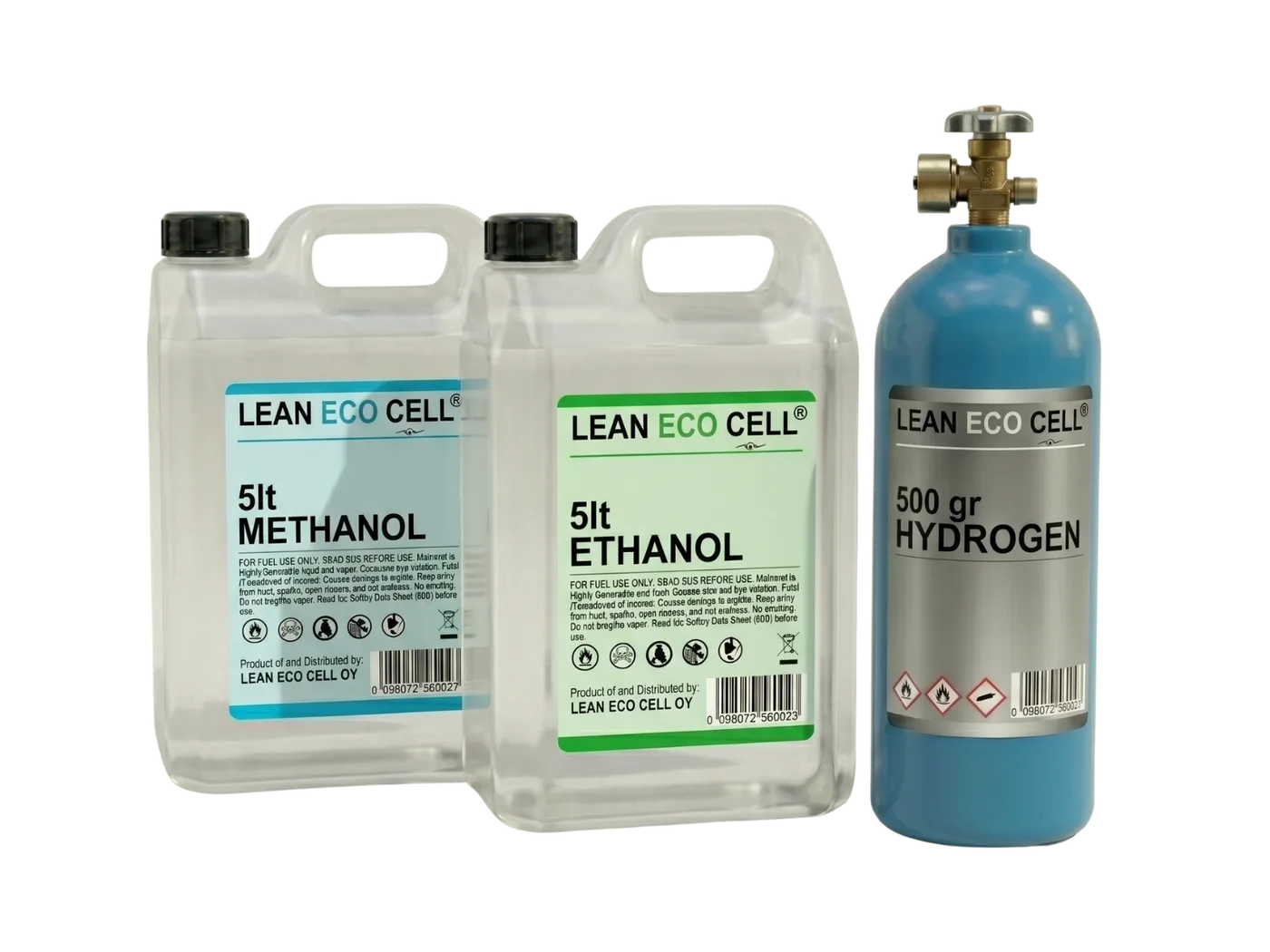
LEC does not wait for infrastructure. Our fuel cells operate on hydrogen where it is available — and on methanol or ethanol where it is not. Switching between fuels requires a simple water flush. No hardware changes. No reconfiguration.
Methanol is commercially available worldwide. Ethanol can be sourced locally, including from renewable production. Hydrogen is the highest-efficiency option when the supply chain supports it. LEC gives your operation all three options in a single unit.
Products
Three Power Classes. One Platform.
Three product families. One core technology. Configured for your application — deploy standalone or stack for higher output across any commercial application.
25W / 50W / 100W
Industrial Wearable / Portable Power Unit
Personal portable fuel cell for off-grid field workers, remote monitoring operations, and extended outdoor assignments.
| Power Output | 25W / 50W / 100W configurations |
| Fuel Options | Hydrogen, Methanol, Ethanol |
| Power Density | 1-5 kW/kg (stack-level, projected) |
| Switching | Water-flush between fuels |
| Operation | Near-zero emission, near-silent |
| Form Factor | Wearable or pack-mounted |
Ideal For
Remote environmental monitoring, pipeline and utility inspection teams, construction site supervisors, geological survey crews, telecommunications maintenance, off-grid research operations.
500W / 1kW
Commercial Portable Generator
Near-zero-emission portable power for construction sites, outdoor events, remote industrial operations, agricultural applications, and temporary installations. The diesel generator replacement that actually works — silent, clean, and fuel-flexible.
| Power Output | 500W / 1kW configurations |
| Fuel Options | Hydrogen, Methanol, Ethanol |
| Emission | Zero local pollutants (no NOx/CO/particulates); H₂ mode = zero CO₂ |
| Noise | Near-silent operation |
| Transport | Portable, vehicle-deployable |
| Runtime | Extended — limited by fuel supply, not battery |
Ideal For
Construction site power, outdoor event production, film and media location power, agricultural irrigation and monitoring, temporary retail installations, remote telecoms sites, emission-restricted urban zones.
1kW / 2kW
Commercial & Industrial UAV Power Pack
Extended-endurance fuel cell power for commercial and industrial drone operations. When battery-powered drones land to recharge, LEC-powered drones keep flying.
| Power Output | 1kW / 2kW configurations |
| Fuel Options | Hydrogen, Methanol, Ethanol |
| Power Density | 1-5 kW/kg (stack-level, projected) |
| Integration | Designed for OEM integration |
| Advantage | up to ~5.85x endurance vs. battery drones |
| Switching | Water-flush between fuels |
Ideal For
Infrastructure inspection fleets, precision agriculture operators, commercial delivery drone manufacturers, construction and surveying companies, environmental monitoring agencies, energy sector inspection teams.
Use Cases
How Commercial Teams Can Use LEC
Five industries where multi-fuel, high-density portable power opens new operational possibilities. Each use case shows the current limitation, the LEC advantage, and the measurable impact for your business.
Infrastructure Inspection
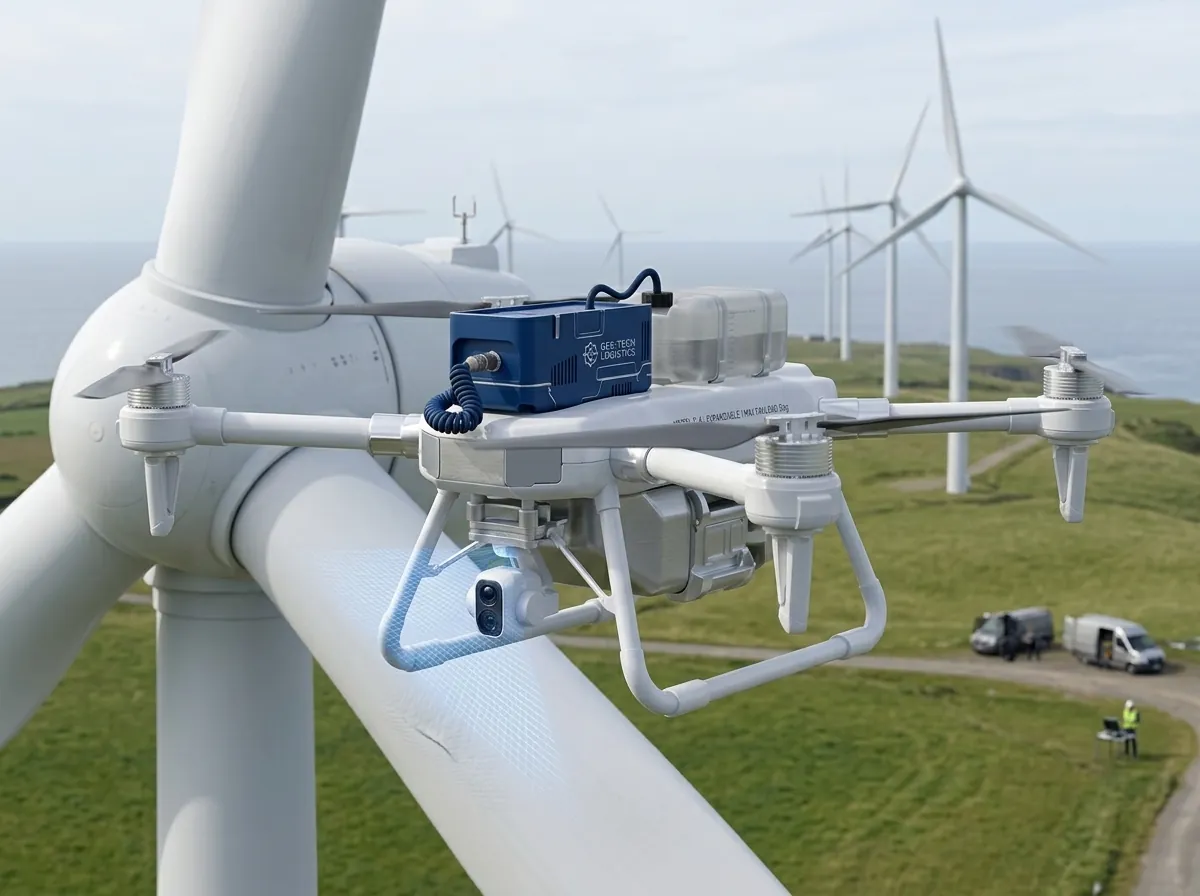
Battery-powered inspection drones cover a fraction of a pipeline corridor or a handful of wind turbines before returning to recharge. Every landing is lost time, lost data continuity, and lost efficiency. Multi-day inspection campaigns become multi-week logistics headaches.
- Cover entire pipeline corridors in single continuous flights
- Inspect full wind turbine farms without interruption
- Refuel with methanol at any field location — no hydrogen infrastructure needed
- Continuous data capture eliminates gaps between battery swaps
Precision Agriculture
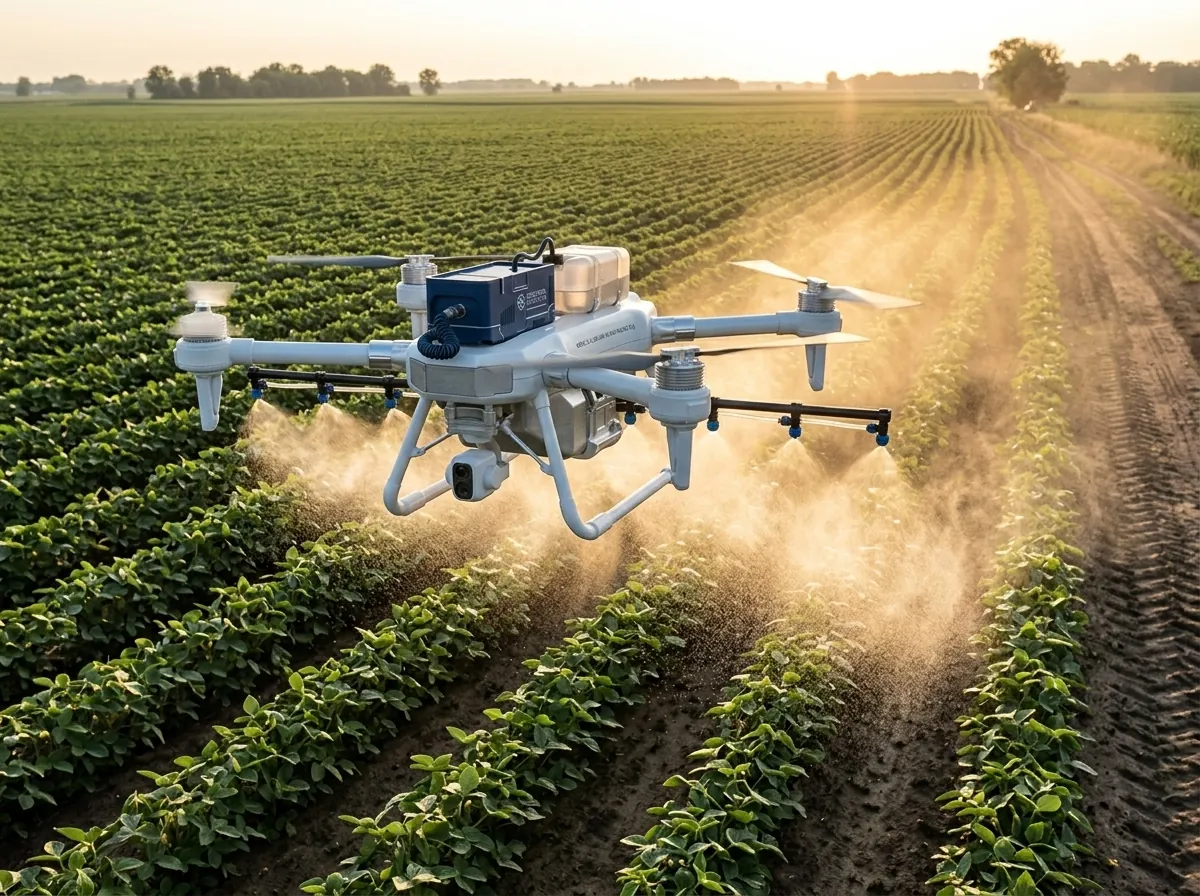
Large-scale crop monitoring depends on aerial data — health mapping, irrigation analysis, pest detection, yield estimation. Battery drones monitor a few fields before landing. For operations spanning thousands of hectares, battery logistics turn a technology advantage into a bottleneck.
- Single drone covers areas that previously required multiple drones or multiple days
- Multispectral, thermal, and NDVI analysis across entire properties in one flight
- Earlier detection of crop stress, disease, and irrigation failures
- Reduce drone fleet size for equivalent coverage area
Construction & Surveying
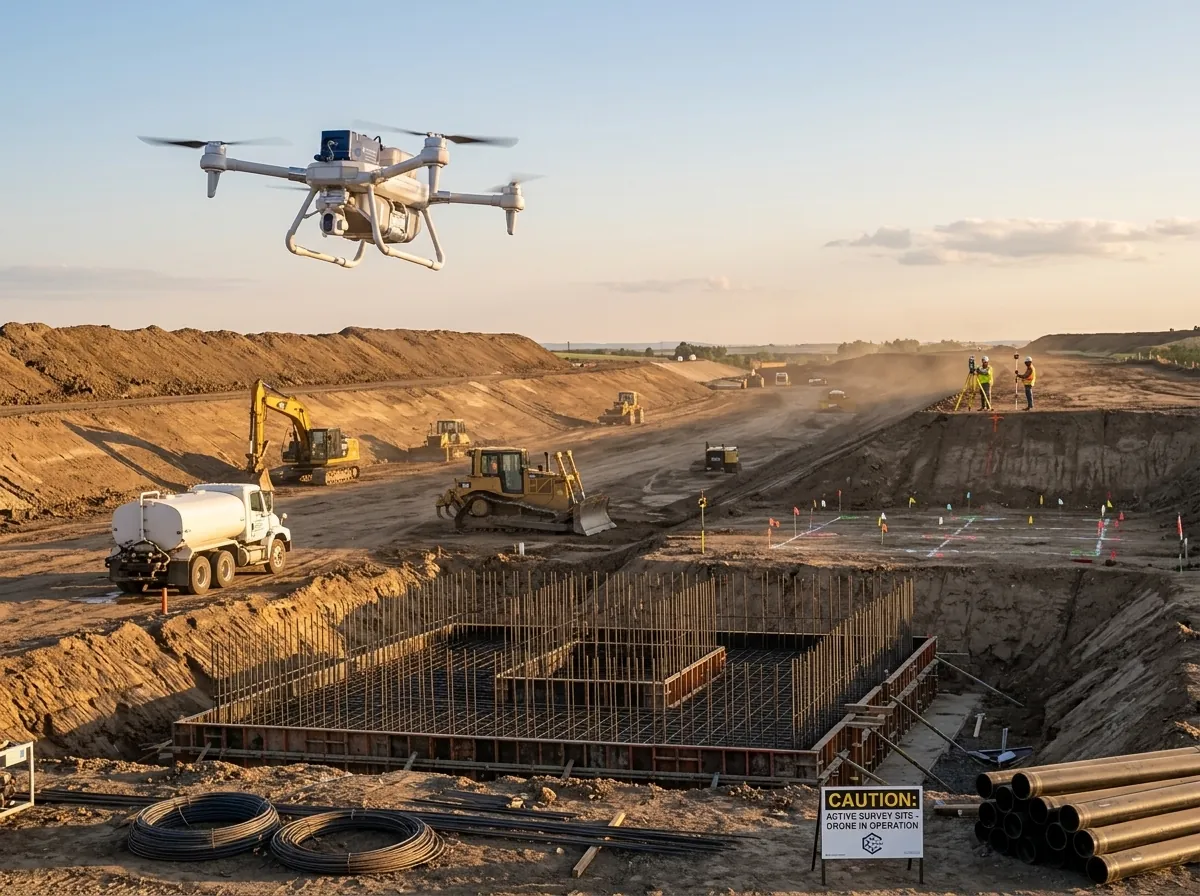
Project timelines depend on accurate, current topographic data. Volumetric calculations, progress documentation, and safety monitoring require frequent aerial surveys across entire sites — not samples. On the ground, emission regulations increasingly restrict diesel generators on urban construction sites.
- Uninterrupted photogrammetry, LiDAR, and thermal inspection across full sites
- Near-zero-emission portable generators replace diesel on noise-sensitive urban sites
- Near-silent operation eliminates community complaints in residential areas
- Meet tightening emission regulations without sacrificing portable power
Last-Mile & Rural Delivery
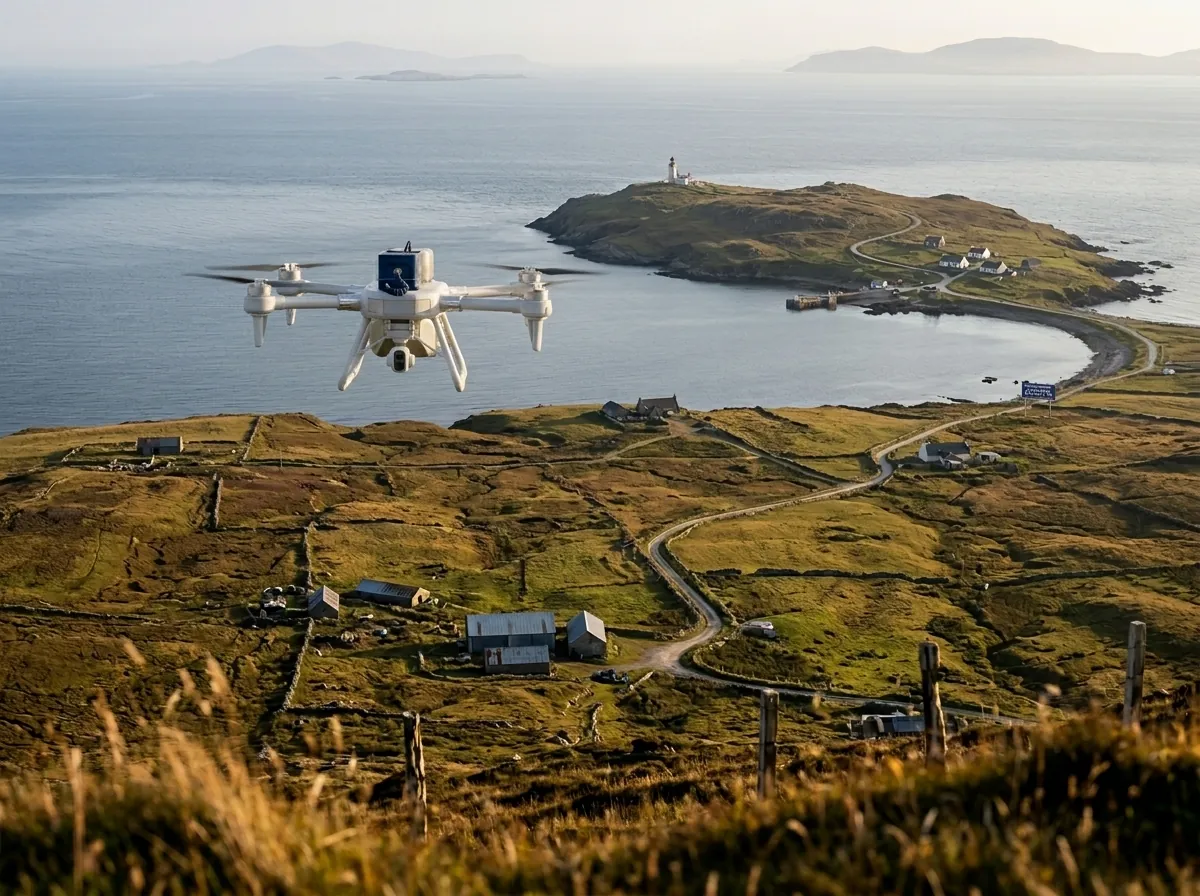
The highest-value drone delivery applications are in areas hardest to reach — rural healthcare, island logistics, remote communities. These are precisely the missions that battery range cannot serve. The geography of last-mile logistics demands more than 20 minutes of flight time.
- Extend delivery drone range from tens of kilometers to hundreds
- Reach rural, island, and remote communities that battery drones cannot serve
- Multi-fuel operation: refuel from any hub with commercially available methanol
- Open market segments that battery technology has locked out for drone OEMs
Environmental Monitoring
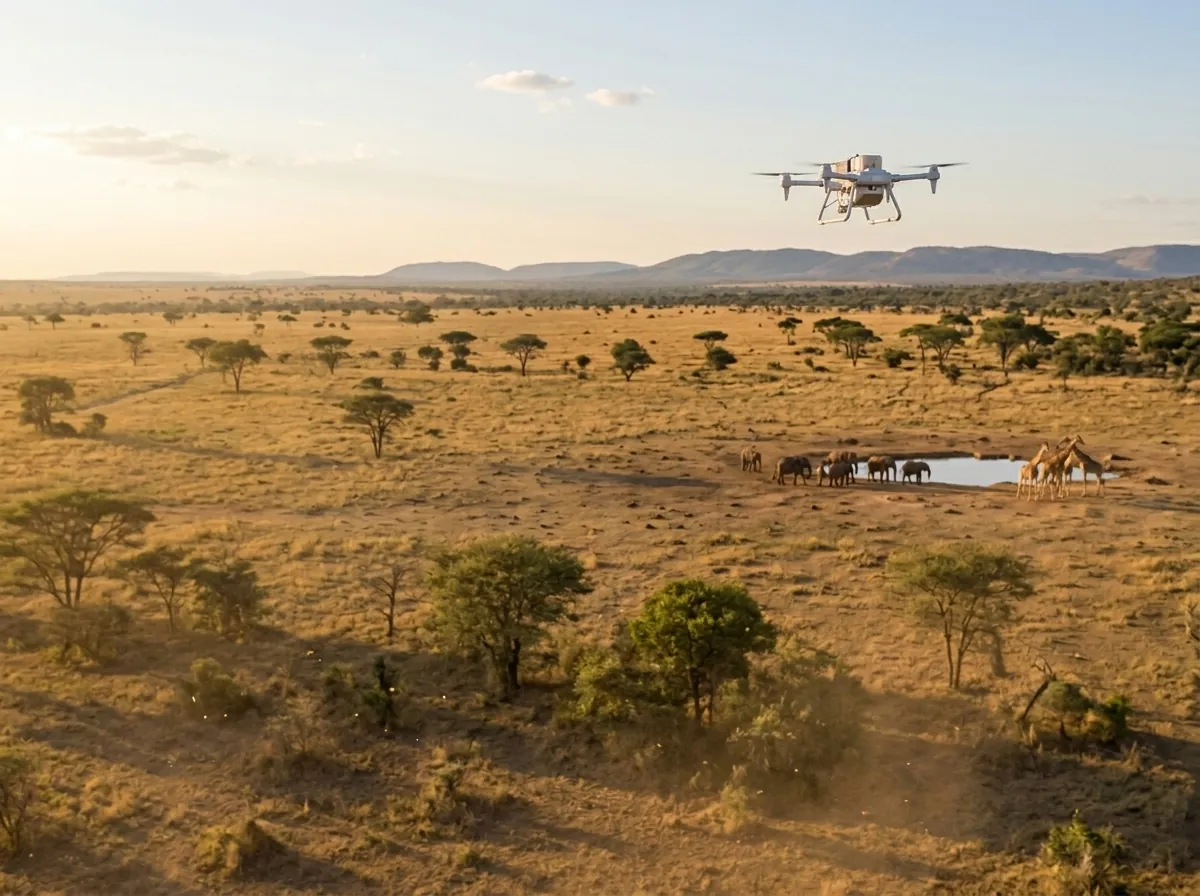
Air quality, water quality, wildlife populations, methane emissions, deforestation — these missions share a common requirement: extended duration. The phenomena being measured do not operate on 20-minute battery cycles. Environmental agencies and ESG-mandated companies need observation that matches the timescale of ecological processes.
- Hours of continuous aerial monitoring per flight over forests, coastlines, and industrial zones
- Multi-day ground sensor operation without grid power or battery replacement
- Complete coverage of large monitoring zones in single campaigns
- Data continuity for longitudinal environmental studies and compliance reporting
Partnership
Build With Us
LEC is built for integration. Our modular fuel cell architecture adapts to your product, your power requirements, your fuel constraints, and your go-to-market timeline. We do not sell a product off a shelf and walk away. We build with you.
OEM Integration
Embed LEC fuel cells directly into your products. We provide the core power technology — you build the application. From initial specification through production supply.
For
Product manufacturers, device OEMs, vehicle manufacturers, drone manufacturers, industrial equipment companies.
Custom Power Solutions
LEC's modular architecture enables custom power solutions designed to your exact specifications — power output, form factor, fuel type priority, environmental rating, and integration constraints.
For
System integrators, project developers, specialized industrial operators, research institutions.
Product Co-Creation
You bring the application expertise. We bring the fuel cell technology. Together we create products tailored to your market — powered by LEC systems and modules. All fuel cell IP stays with LEC. Your product gets the best portable power available.
For
Technology companies entering clean energy, industrial equipment manufacturers, companies building next-generation powered products.
Technology
The Technology Behind the Platform
LEC's fuel cell performance comes from patent-pending architecture — not incremental improvements to conventional designs.
Our proprietary membrane formulas are less permeable, longer lasting, and more fuel efficient than industry-standard alternatives. The single-piece MEA eliminates heavy stack hardware, clamping compression, and complex sealing.
The result: lighter weight, fewer failure points, simpler manufacturing, and the modular scalability that makes one core technology serve applications from mW wearable units to MW-class containerized systems.
Performance Metrics
| Metric | LEC | Industry Context |
|---|---|---|
| Power Density (stack, projected) | 1-5 kW/kg | Li-ion: 0.35 kW/kg |
| Stack Efficiency — Methanol (LHV) | 45% | Industry avg: 30-40% |
| Fuel Options | 3 (H₂, MeOH, EtOH) | Most competitors: 1 |
| Fuel Switching | Water flush | Separate product lines |
| Scalability | mW to MW | Same core technology |
Get In Touch
Ready to Build the Future of Clean Portable Power?
For OEMs, system integrators, industrial operators, and clean energy innovators — the platform is ready. The partnership models are defined. The technology is lab-validated and demo-ready. The question is who builds them with you.