Multi-fuel PEM fuel cells: the complete guide
What a multi-fuel PEM fuel cell is, how one membrane runs on hydrogen, methanol and ethanol, how it compares to lithium-ion, and where it's deployed — from soldier power to megawatt systems.
A multi-fuel PEM fuel cell is a proton-exchange-membrane fuel cell that generates clean electricity from more than one fuel — hydrogen, methanol or ethanol — on a single hardware platform. Lean Eco Cell's patent-pending, single-piece membrane electrode assembly (MEA) makes this possible, delivering up to ~15× the power density of lithium-ion (stack-level, projected from validated MEA data) in a silent, low-signature package that scales from a few watts to the megawatt range. This guide covers how it works, why multi-fuel matters, how it compares to batteries, and where it's used.
What is a PEM fuel cell?
A proton-exchange-membrane (PEM) fuel cell converts fuel and oxygen directly into electricity, heat and water through an electrochemical reaction — not combustion. The heart of the cell is the membrane electrode assembly (MEA): a thin membrane coated with catalyst layers where the reaction happens. There are no pistons and no flame, which is why fuel cells run quietly, with a low thermal signature and zero local emissions when run on hydrogen.
The multi-fuel breakthrough: one platform, three fuels
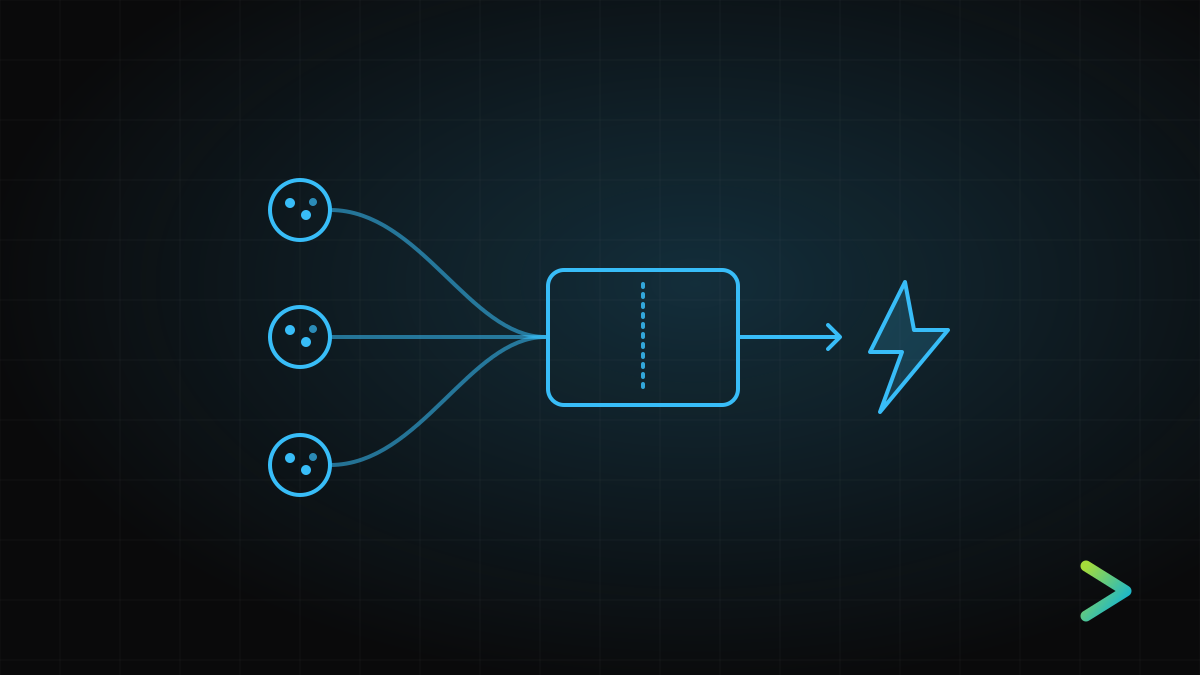
Conventional fuel cell makers build a separate product line for each fuel — one architecture for hydrogen, another for methanol. Lean Eco Cell takes a different path: a single-piece MEA with proprietary membrane formulations that runs on hydrogen, methanol or ethanol on the same hardware. Changing fuel is a matter of what you feed it, not a different product.
These chemistries have industry names — PEM for hydrogen, DMFC for direct methanol, DEFC for direct ethanol. Running all three on one membrane is hard: ethanol in particular requires breaking a stubborn carbon–carbon bond to oxidise fully. Solving that on a single platform is the core of LEC's patent-pending innovation.
Why multi-fuel matters
- Fuel logistics flexibility — use whatever fuel is available in theatre or on site: hydrogen where it's supplied, liquid methanol or ethanol where storing or transporting hydrogen isn't practical.
- Liquid fuels are easy to carry — methanol and ethanol are liquid at room temperature, energy-dense per litre, and backed by a mature supply chain, unlike compressed or cryogenic hydrogen.
- One logistics tail, many missions — a single platform covers use cases that would otherwise need several different power products.
Power density vs lithium-ion
For missions measured in hours and days rather than minutes, the limiting factor is how much energy you can carry per kilogram. This is where multi-fuel fuel cells change the equation:
- Up to ~15× the power density of lithium-ion at the stack level (projected from validated MEA data) for long-duration use — because you carry a small, light fuel-cell stack plus energy-dense liquid fuel, instead of heavy cells sized for the entire mission.
- Refuel in seconds by swapping a fuel cartridge — no waiting for a charge.
- Performance holds in the cold — designed to operate from −32 °C to +60 °C, where battery capacity collapses.
- Silent and low-signature — under ~40 dB with a low thermal signature, which matters for defense and for noise-sensitive sites.
Batteries still win for short bursts and frequent cycling; fuel cells win on duration, weight-per-mission and cold-weather endurance. In practice the two are often paired in a hybrid.
From watts to megawatts
The same architecture scales across the whole power range:
- Modular from ~1 kW to 1 MW — stack modules to the power you need.
- 45% stack / 41% net efficiency on methanol; 55% stack / 50% net on hydrogen (LHV) — vs the 30–40% DMFC industry norm.
- Lean manufacturing by design — the platform needs no specialty fab, so production scales with low capital expenditure. That is what makes high-volume OEM supply and licensing viable, not just lab prototypes.
Where multi-fuel fuel cells are used
- Defense — wearable power for the dismounted soldier (a ~72-hour mission under ~2.7 kg including fuel), near-silent field generators that replace diesel, and power for forward positions.
- Unmanned systems (UAV / USV / UGV) — multi-fuel power packs that extend tactical UAV endurance up to ~5.85× versus lithium-ion, turning minutes of flight into hours.
- Disaster & emergency — silent, fume-free backup power for response teams, field hospitals and communications when the grid is down.
- Commercial & industrial — off-grid sites, microgrids, marine, agriculture and logistics that want clean power without diesel noise, fumes and refuelling logistics.
Standards & compliance
LEC's technology is built for serious buyers: MIL-STD and STANAG compliance support for defense programs, and handling under EU dual-use regulation (Regulation (EU) 2021/821) for export-controlled end uses. As an EU company based in Finland, LEC is positioned for allied and NATO-aligned procurement.
Talk to our team
Lean Eco Cell builds multi-fuel PEM fuel cells for defense, emergency response and industry — and partners with distributors, integrators and licensees worldwide. Explore the technology or get in touch.
Frequently asked questions
Related Articles
Fuel cell vs lithium-ion: power density, weight & runtime
A direct comparison of multi-fuel fuel cells and lithium-ion batteries — power density, weight, runtime, refuelling, cold-weather and noise — and when to use which.
Methanol vs hydrogen vs ethanol: choosing fuel for portable power
Hydrogen, methanol and ethanol each have a place in portable fuel cell power. How they compare on cleanliness, storage, transport and availability — and why a multi-fuel platform means you don't have to pick just one.