Fuel cell vs lithium-ion: power density, weight & runtime
A direct comparison of multi-fuel fuel cells and lithium-ion batteries — power density, weight, runtime, refuelling, cold-weather and noise — and when to use which.
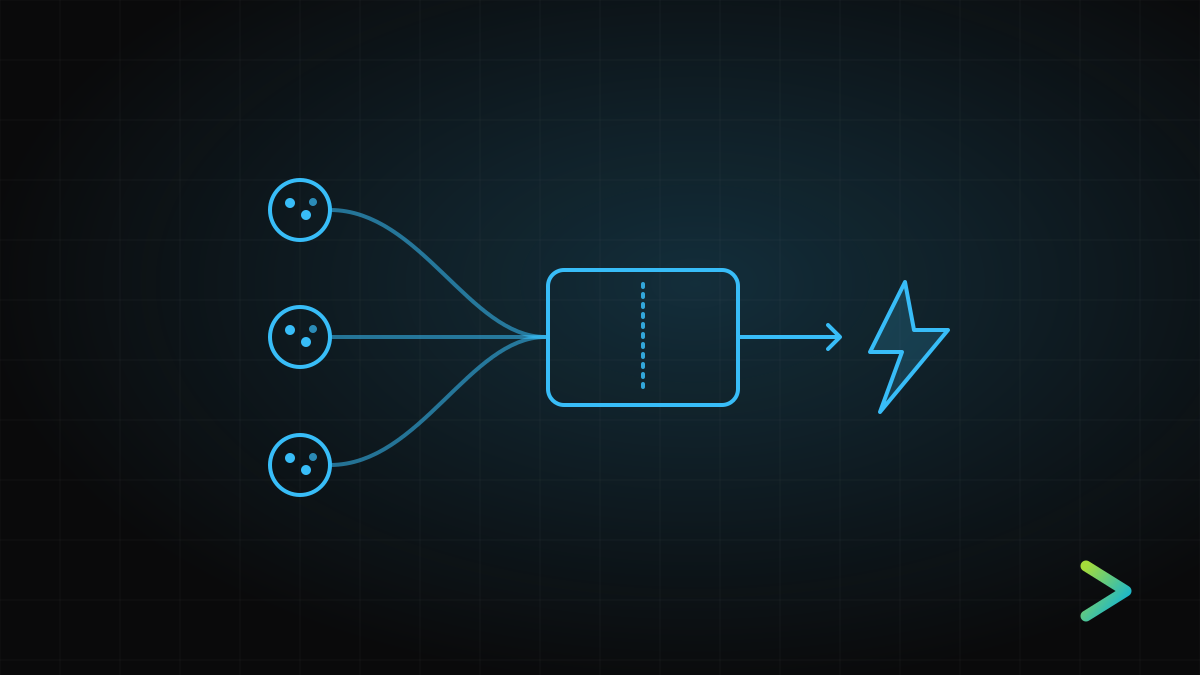
For long-duration missions, a multi-fuel fuel cell carries far more usable energy per kilogram than a lithium-ion battery — up to ~15× at the stack level (projected from validated MEA data) — refuels in seconds, and keeps working in the cold. A battery is better for short, high-power bursts and frequent recharging. The honest answer is that the two are complementary: fuel cells win on endurance and weight-per-mission; batteries win on instant power and simplicity — which is why they are often combined in a hybrid.
How they work — the core difference
- A battery is an energy store. It holds a fixed amount of energy, charged in advance and depleted as you use it, then recharged over hours.
- A fuel cell is an energy converter. It generates electricity continuously from fuel — hydrogen, methanol or ethanol — so you extend runtime by carrying more fuel, not a bigger battery.
That single distinction drives every difference below.
Power density & weight
For anything carried or flown, the metric that matters is usable energy per kilogram.
- Lithium-ion: the ~1× baseline — and heavy when sized for a long mission, because the entire mission's energy sits in the cells.
- LEC multi-fuel fuel cell: up to ~15× the power density at the stack level (projected from validated MEA data) for long-duration use — a light stack plus energy-dense fuel. Depending on the fuel and configuration the advantage ranges from roughly ~9× up to ~20× (see the power-density comparison on our technology page).
The longer the mission, the wider the gap — because adding runtime means adding light fuel, not heavy cells.
Runtime & refuelling
- Battery: runtime is capped by capacity; recharging takes hours and needs a power source.
- Fuel cell: refuel in seconds by swapping a cartridge or topping up fuel — effectively unlimited runtime wherever fuel is available.
Cold, heat & environment
- Battery: capacity drops sharply in the cold, and thermal management adds weight.
- LEC fuel cell: designed to operate from −32 °C to +60 °C, so performance holds where batteries fade.
Noise & signature
- Battery: silent itself — but the generator charging it usually is not.
- LEC fuel cell: near-silent (under ~40 dB) with a low thermal signature and no combustion fumes — which matters for defense and noise-sensitive sites.
Power delivery
- Battery: excellent at instantaneous high-current bursts.
- Fuel cell: steady, sustained output; for sharp peak loads it is paired with a small buffer battery in a hybrid.
So which should you use?
- Short, high-power, frequently recharged (power tools, short flights) → battery.
- Long duration, weight-critical, off-grid, cold or quiet (multi-day soldier power, long-endurance UAVs, emergency and off-grid sites) → multi-fuel fuel cell.
- Both → a fuel-cell + battery hybrid: the cell provides endurance, the battery covers peak bursts.
Frequently asked questions
Is a fuel cell more efficient than a battery? It is a different question. A battery returns most of the energy you put in, but you must carry all of it. A fuel cell converts fuel on demand at 45–55% stack efficiency depending on fuel (41–50% net, LHV), so for long missions it delivers far more usable energy per kilogram carried.
Do fuel cells replace batteries? Usually they complement them. Many LEC deployments pair a fuel cell for endurance with a small battery for peak power.
Charging time vs refuelling — what's the difference? Charging a battery takes hours and a power source; refuelling a fuel cell takes seconds by swapping or topping up fuel.
Which is better for drones? For long-endurance tactical UAVs, a multi-fuel fuel cell extends flight time up to ~5.85× versus lithium-ion — minutes become hours. For short FPV-style flights, batteries remain the simplest choice.
Talk to our team
Comparing options for a specific mission? Explore the technology, read the complete guide to multi-fuel PEM fuel cells, or get in touch.
Related Articles
Multi-fuel PEM fuel cells: the complete guide
What a multi-fuel PEM fuel cell is, how one membrane runs on hydrogen, methanol and ethanol, how it compares to lithium-ion, and where it's deployed — from soldier power to megawatt systems.
Methanol vs hydrogen vs ethanol: choosing fuel for portable power
Hydrogen, methanol and ethanol each have a place in portable fuel cell power. How they compare on cleanliness, storage, transport and availability — and why a multi-fuel platform means you don't have to pick just one.