Methanol vs hydrogen vs ethanol: choosing fuel for portable power
Hydrogen, methanol and ethanol each have a place in portable fuel cell power. How they compare on cleanliness, storage, transport and availability — and why a multi-fuel platform means you don't have to pick just one.
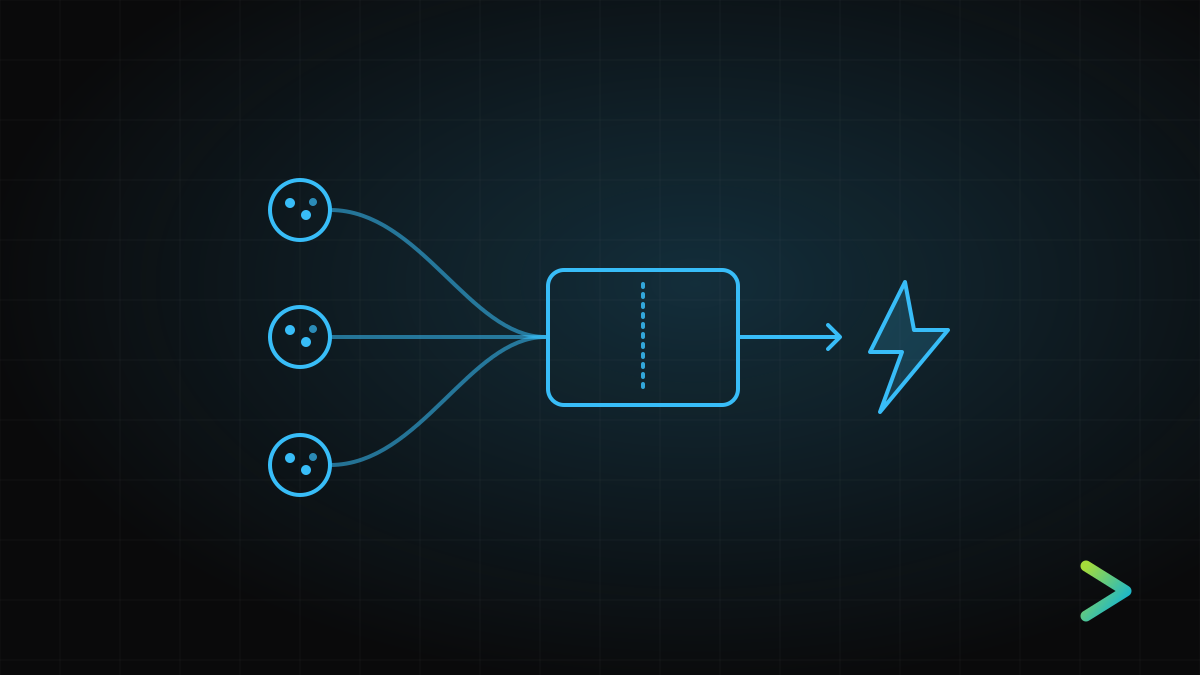
Lean Eco Cell's fuel cells run on three fuels — hydrogen, methanol and ethanol — on the same hardware. Which one is best depends on your logistics, not the cell: hydrogen is the cleanest (only water and heat) but the hardest to store and transport; methanol and ethanol are liquids that are far easier to carry, store and resupply, at the cost of slightly more complex chemistry and some emissions. The point of a multi-fuel platform is that you don't have to commit — you use whichever fuel fits each mission.
Why fuel choice matters more than the cell
The fuel cell converts whatever you feed it; the hard part is getting fuel to where the power is needed. In the field, off-grid or in a disrupted region, fuel logistics — how easily you can store, transport and resupply — often decide which power source actually works. That is the lens for comparing these three.
Hydrogen — cleanest, hardest to handle
- Emissions: the cleanest option — reacting with oxygen produces only water and heat, with zero local emissions.
- Storage & transport: the catch. Hydrogen must be compressed or kept cryogenic, which means bulky tanks and specialized handling.
- Best where: hydrogen is already supplied or infrastructure exists, and the cleanest possible operation is required.
Methanol — liquid, energy-dense, mature supply (DMFC)
- Form: liquid at room temperature, energy-dense per litre, with a mature global supply chain.
- Handling: easy to store, transport and refill — cartridges from 350 ml to 10 L, no pressurized tanks, no specialized handling.
- Emissions: far lower than diesel combustion, though as a carbon fuel it does produce some CO₂ along with water.
- Best where: field, off-grid and expeditionary use where hydrogen logistics are impractical.
Ethanol — widely available liquid fuel (DEFC)
- Form: liquid and widely available, including from renewable/bio sources.
- Chemistry: the most demanding — fully oxidising ethanol requires breaking a carbon–carbon bond, which is part of what makes multi-fuel operation hard. LEC's single-piece MEA is designed to handle it.
- Best where: regions where ethanol is abundant and cheap, and supply is simpler than methanol or hydrogen.
How to choose
Pick by the constraint that binds your mission:
- Cleanliness is paramount and hydrogen is available → hydrogen.
- You need easy storage, transport and field refuel → methanol or ethanol.
- Local fuel availability and cost dominate → whichever liquid your region supplies.
- Mission duration is long and weight matters → all three beat batteries; choose by logistics. See fuel cell vs lithium-ion.
Why multi-fuel beats picking one
Commit to a single fuel and you inherit its single point of failure — no hydrogen, no power. LEC runs all three on one platform, so you choose by logistics and fall back when a supply line is cut. One platform adapts to the fuel reality of each mission instead of forcing the mission to adapt to the fuel.
Frequently asked questions
Which fuel has the highest energy density? By mass, hydrogen is very high — but once you include the heavy tanks needed to store it, liquid methanol and ethanol are far more practical to carry and resupply. The right comparison is system-level and logistics-aware, not fuel-in-isolation.
Are methanol and ethanol zero-emission? No. On hydrogen the only outputs are water and heat. Methanol and ethanol are carbon fuels, so they produce some CO₂ — but far less than diesel combustion, and with no engine exhaust.
Do I need different hardware for each fuel? No. LEC's multi-fuel platform runs hydrogen, methanol or ethanol on the same single-piece MEA — see the glossary for MEA, DMFC and DEFC.
Which is best for cold weather? All three operate from −32 °C to +60 °C. Liquids avoid the added complexity of cold or compressed hydrogen storage in the field.
Talk to our team
Working out the right fuel for your operation? Explore the technology, read the complete guide to multi-fuel PEM fuel cells, or get in touch.
Related Articles
Multi-fuel PEM fuel cells: the complete guide
What a multi-fuel PEM fuel cell is, how one membrane runs on hydrogen, methanol and ethanol, how it compares to lithium-ion, and where it's deployed — from soldier power to megawatt systems.
Fuel cell vs lithium-ion: power density, weight & runtime
A direct comparison of multi-fuel fuel cells and lithium-ion batteries — power density, weight, runtime, refuelling, cold-weather and noise — and when to use which.